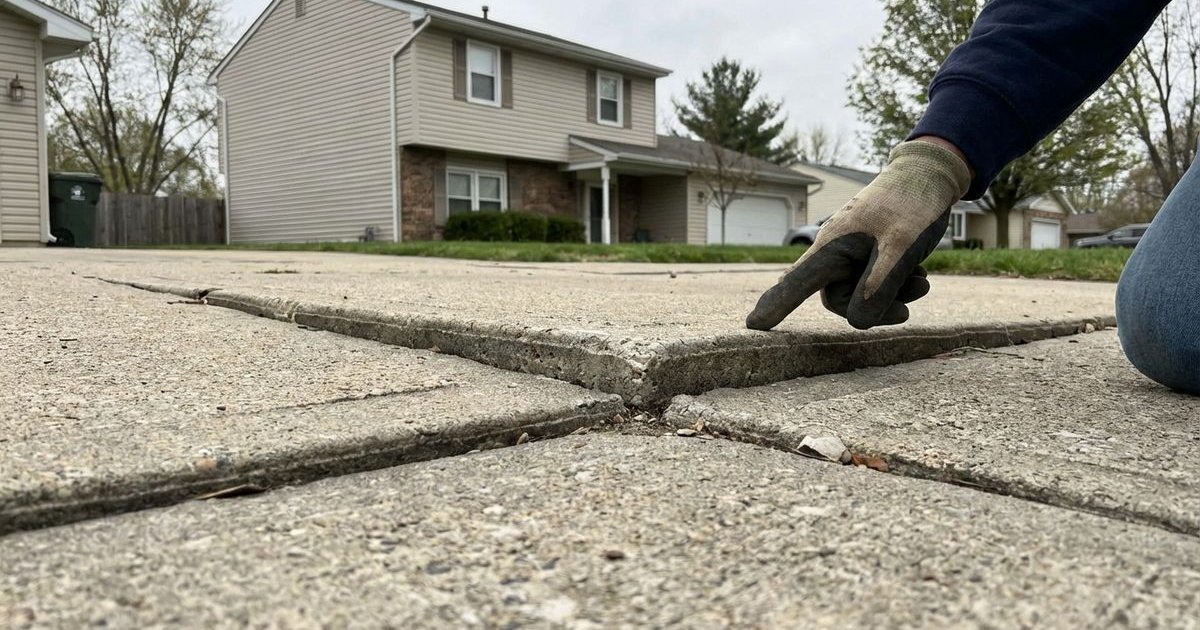
Concrete problems don’t fix themselves. You know how one winter can turn a small crack into a major headache, especially with the freeze-thaw cycles we see here in Western New York. Catching these warning signs early isn’t just about curb appeal; it’s about protecting your wallet and your family.
Our team at Concrete Leveling Buffalo has seen thousands of slabs settle, and the difference between a simple repair and a full replacement often comes down to timing. We want to help you spot the specific indicators that your concrete needs attention before the damage spreads. Here are the five verifiable signs that your concrete is settling and needs leveling.
1. Visible Trip Hazards
The most urgent sign is when concrete slabs stop meeting evenly. You might just see an annoying bump, but federal safety standards define this specific height difference as a liability.
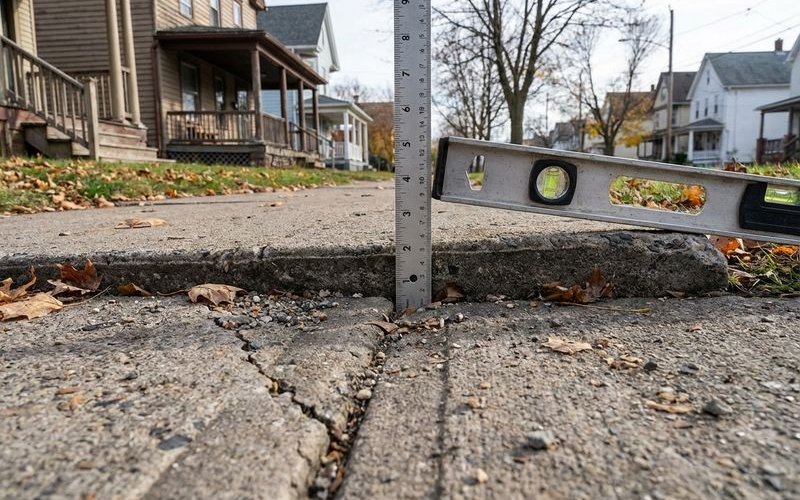
The 1/4-Inch Rule According to the Americans with Disabilities Act (ADA) standards, any vertical change in level of 1/4 inch or greater is officially a trip hazard. We often see homeowners ignore these small lips until someone trips, but for a commercial property manager, that quarter-inch can mean a lawsuit.
What to look for:
- Step separation: Gaps where your front stoop meets the walkway.
- Driveway sinking: Slabs dropping below the garage floor level—a common candidate for driveway leveling.
- Sidewalk unevenness: Tree roots or washouts lifting one side of a square.
The “Toe Test” Walk your property at a normal pace and pay attention to where your feet catch. If you have to unconsciously lift your toe to clear a joint, measuring tape will likely confirm it’s over that 1/4-inch danger zone.
2. Water Pooling in Wrong Places
Concrete is engineered to move water away from your foundation, not hold it. When slabs settle, they lose their “positive drainage,” creating low spots that trap rain and snowmelt.
The 2% Slope Standard Building codes generally require paved surfaces near a home to slope away at a minimum of 2% (about 1/4 inch per foot). We find that when a slab settles even slightly, this slope flattens or reverses, sending water straight back toward your basement walls.
Warning signs:
- Puddles that remain 24 hours after a storm.
- Ice patches forming in specific spots on your driveway.
- Discoloration or moss growth in low areas.
- Water running toward your house instead of the street.
This pooling causes more than just wet shoes. That standing water can seep into the soil beneath the slab, causing further erosion and accelerating the sinking process.
3. Cracks Appearing or Growing
Not all cracks are created equal. While hairline cracks are common in curing concrete, specific patterns tell us that the ground below is moving.
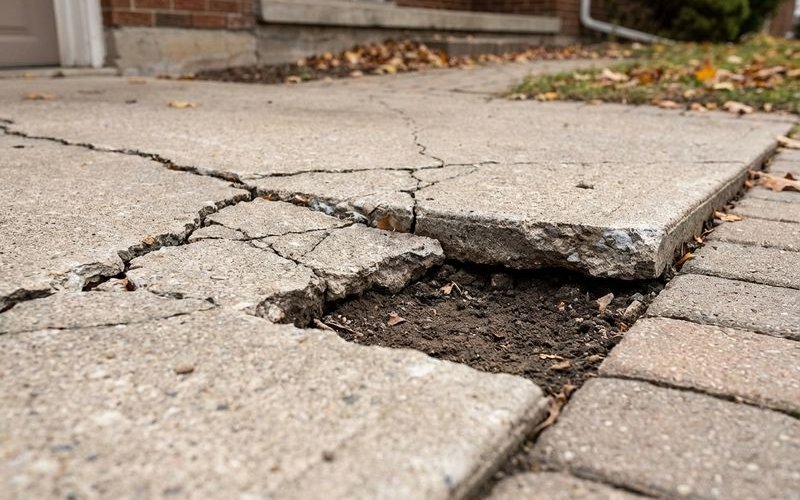
Structural vs. Cosmetic Industry standards like ACI 224R-01 suggest that while some cracking is expected, cracks widening beyond 1/8 inch often signal structural distress. We look for “active” cracks—ones that are clean, sharp, and continuing to open up.
Key patterns to check:
- Corner cracks: These usually mean the soil has washed out from under the corner, creating a void.
- Offset cracks: If one side of the crack is higher than the other, the slab is settling unevenly.
- Parallel cracks: Multiple cracks running in the same direction often indicate heavy stress from a large void.
The Coin Trick Take a standard US quarter and try to insert it into the crack. A quarter is roughly 1.75mm thick; if it fits easily into the gap, that crack is wide enough to allow significant water intrusion and needs assessment.
4. Doors Sticking or Not Closing
Settling concrete doesn’t just affect the ground; it pulls on everything attached to it. When your foundation or garage slab sinks, it distorts the door frames above it.
Check the “Reveal” Look at the gap between the top of your door and the frame (the “reveal”). This gap should be consistent all the way across. We often find that a crooked reveal is the first subtle hint of slab movement before floor cracks even appear.
Common symptoms:
- Garage doors showing daylight at the bottom corners when closed.
- Interior doors in slab-on-grade homes swinging open on their own.
- Deadbolts that suddenly don’t align with the strike plate.
- Sliding patio doors becoming difficult to latch.
Forcing the door won’t fix the root cause. Adjusting the hinges is a temporary band-aid, but leveling the slab underneath restores the frame to its true square position.
5. Hollow Sounds When Walking
Healthy concrete is supported fully by the soil underneath. If you hear a change in pitch as you walk, you likely have “voids”—empty air pockets where soil has washed away.
The “Chain Drag” Method Civil engineers use a standard test called ASTM D4580, or the “chain drag,” to find these hidden issues on bridges. You can do a simplified version at home.
How to test it:
- Take a golf ball, a heavy chain, or a wooden handle.
- Tap or drag it across the concrete surface.
- Listen for a shift from a sharp “ping” (solid) to a dull, drum-like “thud.”
That hollow thud confirms that the concrete is bridging a gap. Addressing these voids with leveling material now can prevent the slab from snapping under the weight of a vehicle later.
Why Early Detection Matters
Waiting to repair concrete is a gamble where the odds are never in your favor. We have crunched the numbers to show why acting on these signs immediately makes financial sense.
The Cost of Waiting Replacing concrete is labor-intensive, requiring demolition, disposal, and pouring new material. Leveling uses the existing slab, which is far more efficient.
Cost Comparison: Leveling vs. Replacement
| Feature | Concrete Leveling (Poly/Mudjacking) | Full Concrete Replacement |
|---|---|---|
| Estimated Cost | $5 - $10 per sq. ft. | $15 - $50 per sq. ft. |
| Repair Time | 2-4 Hours | 2-4 Days (plus cure time) |
| Useable In | Immediately / Same Day | 7-28 Days |
| Landscape Impact | Minimal (dime-sized holes) | Heavy (heavy machinery damage) |
Note: Prices are estimated national averages for 2025/2026 and vary by job size.
Addressing settling early typically costs 50% to 70% less than replacement. Leveling fills the voids that caused the problem, stabilizing the slab permanently.
What to Do Next
If you’ve spotted these trip hazards or heard that hollow thud, you have options. Most settling issues can be permanently fixed with modern polyurethane leveling for a fraction of the cost of pouring new concrete.
Contact us for a free assessment of your property. We will identify exactly what is happening beneath your slabs and give you an honest recommendation on the best way to fix it.