[AddInfographic]
Timing concrete repairs in Western New York is less about the calendar month and more about what the ground is doing. If you lived through the deep freeze we saw in early January 2026, you know exactly how much the soil here expands and contracts.
That movement is the main reason concrete sinks, but it’s also the reason we have to be strategic about when we lift it.
We see this every year. Homeowners call us in March the moment the snow melts, but the ground is often still shifting. To get a repair that actually lasts, you need to hit the sweet spot when the frost is out but the freeze hasn’t returned.
Here is the data-backed reality of when to schedule your concrete leveling in Buffalo.
The Short Answer: Buffalo Concrete Calendar
Most people assume summer is the best time, but the “shoulder seasons” often provide better curing conditions for our limestone slurry.
Here is the breakdown based on average Buffalo temperatures and ground conditions:
| Season | Months | Conditions | Verdict |
|---|---|---|---|
| Prime Window | April - May | Ground stabilizes, temps 40°F-65°F | Best for longevity |
| Prime Window | Sept - Oct | Drier soil, temps 55°F-70°F | Best for winter prep |
| Workable | June - Aug | Hot, dry, fast cure times | Good (High Demand) |
| Restricted | Nov - March | Frozen ground, sub-freezing temps | Emergency/Interior Only |
Why Spring Is The “Rebound” Season
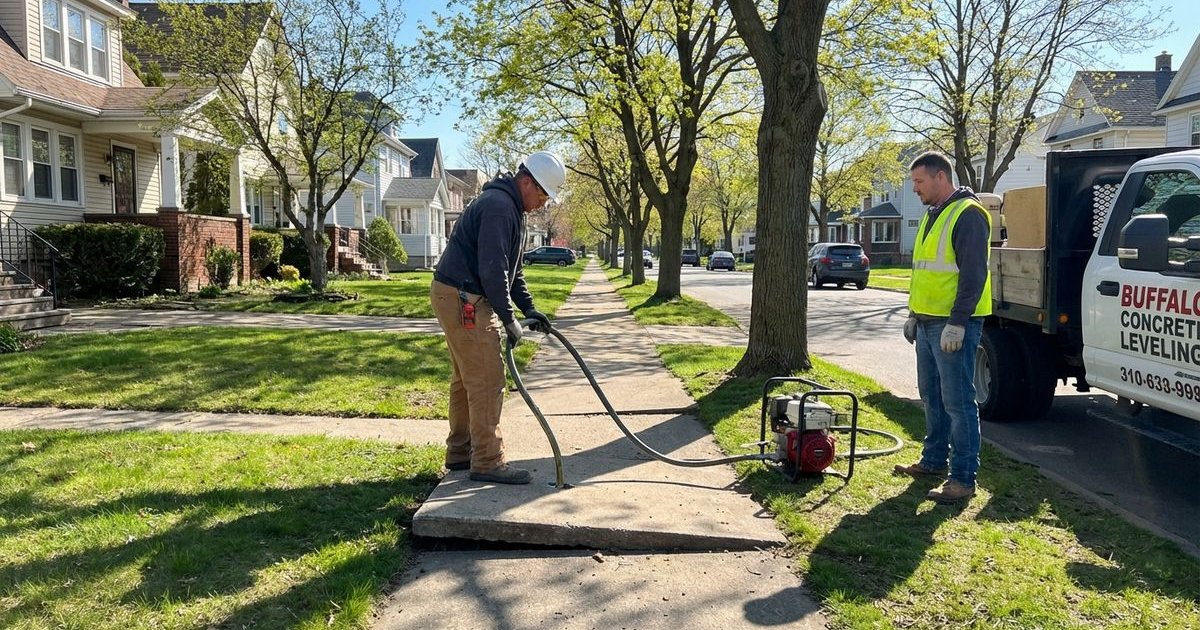
April and May are technically ideal, but patience is key. In Buffalo, our average last frost date lands around late April or early May.
You want to schedule leveling after this date once the “frost heave” has fully settled.
Weather Benefits
- Thaw Completion: By mid-April, the frost has typically left the sub-base, meaning the slab has returned to its true resting position.
- Ideal Curing Temps: Our limestone slurry cures strongest when air temperatures remain moderate (45°F-65°F), which prevents the mix from drying out too fast.
- Rain Management: While Buffalo averages about 3.3 inches of rain in April, the moisture actually helps cement-based slurries cure slower and stronger than in the dry heat of July.
Practical Benefits
- Visual Assessment: Winter damage is fresh. You can see exactly where plows chipped edges or where ice heaved a slab.
- Permit Avoidance: Unlike a full “reconstruction” of a sidewalk—which triggers City of Buffalo Code Section 413-46 and requires a permit—leveling is generally considered maintenance. You avoid the paperwork headache of a full tear-out.
What to Watch
- The “False Spring”: Don’t be fooled by a warm week in March. If we lift a slab while the ground below is still frozen, the slab will sink again when that ice lens melts. We verify ground stability before scheduling.
Why Fall Is The “Protection” Season
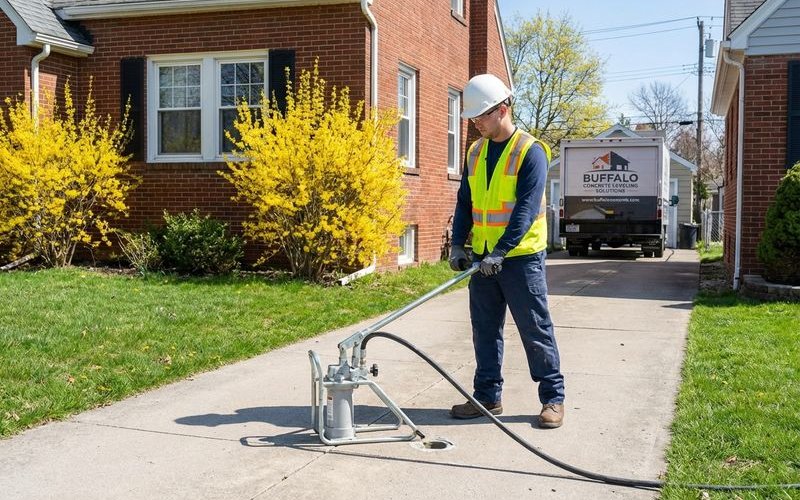
September and October offer the most stable soil conditions of the year. The ground is firm after summer, and the heavy construction rush usually settles down.
Weather Benefits
- Predictability: September in Buffalo averages a high of 72°F and a low of 55°F—perfect consistency for material setting.
- Dry Soil: Late summer dryness means the soil under your slab is compacted, giving us a solid base to lift against.
Practical Benefits
- Trip Hazard Prevention: This is your last chance to fix uneven sidewalks before they become hidden liabilities under snow.
- Sealant Effectiveness: Caulk and sealants adhere better in dry fall weather. Sealing the joints after leveling is the single best way to prevent water from refreezing under the slab in January.
What to Watch
- The October 11th Benchmark: Historically, Buffalo’s average first frost hits around October 11th. We aim to complete all exterior major projects before consistent overnight freezes begin.
Summer: Good, But Hot
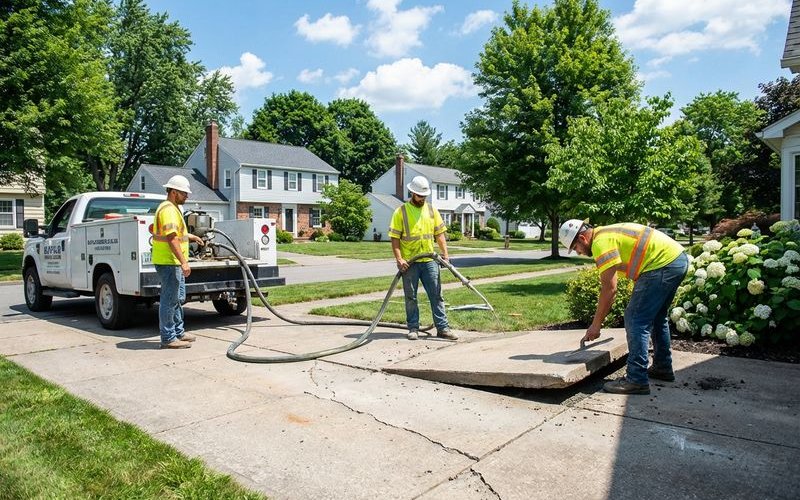
June through August is our busiest season. While the weather is cooperative, the heat introduces a few variables we have to manage.
Benefits
- Rapid Use: In 80°F weather, the slurry sets up faster. You can typically walk on the leveled area within hours.
- Long Days: We can tackle larger commercial projects or long driveways in a single day thanks to 15 hours of sunlight.
Challenges
- Surface Temperatures: Concrete absorbs heat. On a 85°F day, the slab surface can reach 100°F+. We adjust our mix to ensure it flows correctly before setting.
- Demand Spikes: Lead times are longest in July. If you need a repair for a graduation party or BBQ, you need to book by May.
Winter: The Interior Option
November through March is largely a “no-go” for outdoor leveling, but that doesn’t mean we shut down.
The “40-Degree” Rule
Unlike polyurethane foam which can sometimes work in colder temps, our limestone slurry creates a rock-hard, natural support structure. Because it is a cement-based product, it contains water.
If the water in the mix freezes before it cures, the repair will fail.
When Winter Work Happens
- Interior Slabs: We frequently level sinking garage floors, basement slabs, and warehouse floors in January and February. As long as the indoor air temp is above 40°F, we can work.
- Mild Spells: If we get a “January Thaw” where temps stay above freezing for 48 hours, we can sometimes tackle emergency safety trips.
Temperature Requirements Checklist
For us to guarantee the work, we look for these specific environmental conditions:
- Air Temperature: Must be 40°F and rising.
- Ground Temperature: Must be above 35°F (no frost in the top 6 inches).
- Overnight Lows: Must not drop below 32°F for the first 24 hours after installation.
Planning Your Project Timeline
Since our season is dictated by Buffalo’s erratic weather, booking in advance is the smart play.
Ideal Lead Times
For a Spring Project:
- Action: Call us in February or March.
- Result: You get on the schedule for the first prime weeks of April. You beat the “pothole panic” rush that happens when snow melts.
For a Fall Project:
- Action: Call us in July.
- Result: You secure a spot in September, ensuring your driveway is safe before the first Bills game snow arrives.
Emergency Situations
Safety hazards don’t check the forecast. If you have a severe trip hazard (over 1.5 inches) or a liability issue at a commercial entry:
- Call us immediately regardless of the month.
- We can often apply a “cold patch” temporary ramp or schedule a priority stop during a mild weather window.
How We Decide “Go or No-Go”
When we assess a job, we aren’t just looking at the calendar. We check:
- Soil Saturation: Is the ground a mud pit? (We may need to wait a week for drainage).
- Forecast Stability: Is there a freeze warning in the 3-day outlook?
- Project Type: A south-facing driveway melts and dries faster than a shaded north-facing walkway.
Don’t Wait for “Perfect”
While April and September are the “Goldilocks” months, safety is the priority. We successfully level concrete all summer long and well into November during mild years.
If you see a slab sinking toward your foundation or a walkway tripping your guests, don’t overthink the timing. Contact us today. We will look at the current conditions and tell you honestly if we can fix it now or if we need to secure a date on the spring schedule.