Seal Cracks Before They Get Worse
in Buffalo
Professional concrete caulking and crack repair in Buffalo NY. Seal expansion joints and cracks to prevent water damage and further deterioration.
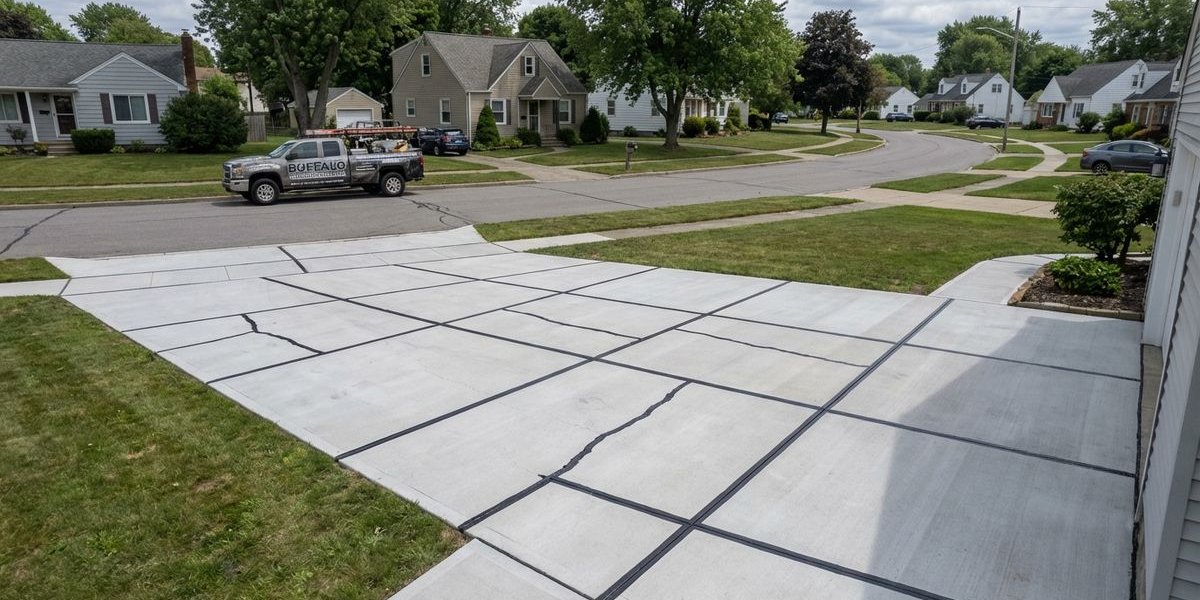
What is Caulking & Crack Repair?
Professional concrete caulking and crack repair in Buffalo NY. Seal expansion joints and cracks to prevent water damage and further deterioration.
The Silent Damage of Open Joints
Those gaps and cracks in your concrete might seem like minor cosmetic issues. But in Buffalo’s climate, they’re open doors for water that causes serious damage beneath the surface.
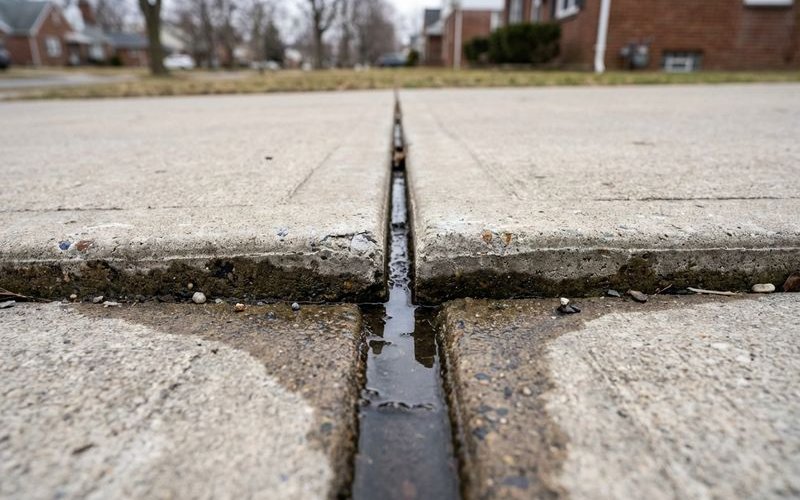
Why Joints and Cracks Need Sealing
Concrete naturally has joints and develops cracks. The problem is what happens when water enters:
- Soil erosion - Water washes away supporting material
- Void formation - Erosion creates underground cavities
- Settling - Concrete sinks into voids
- Freeze damage - Ice expansion widens cracks
- Accelerating deterioration - Each cycle makes it worse
Sealing these openings stops the cycle before major damage occurs.
Types of Joints We Seal
Expansion Joints
These intentional gaps allow concrete sections to move independently. Original caulk fails over time, leaving gaps that need resealing.
Control Joints
The grooved lines in your concrete are designed to control cracking. When they open up, they need attention.
Cold Joints
Where new concrete meets old, these joints can separate and require sealing.
Surface Cracks
Hairline and larger cracks allow water penetration and should be filled.
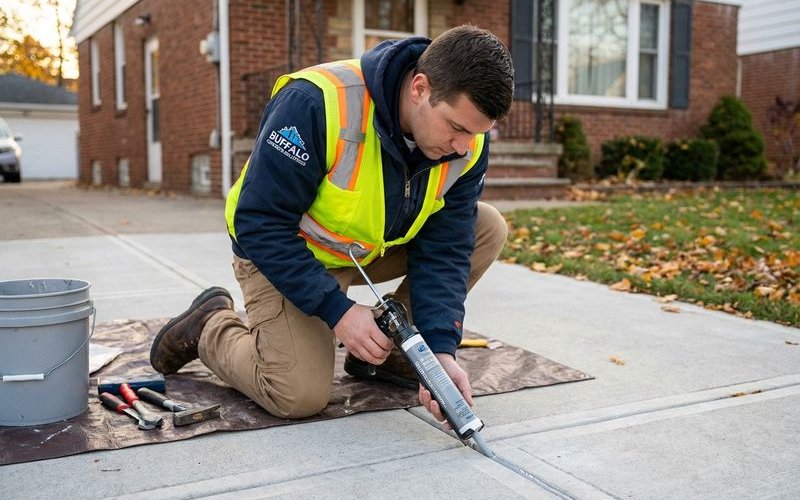
Professional Caulking vs. DIY
Consumer caulks from hardware stores often fail because:
- Wrong caulk type for the application
- Improper joint preparation
- No backer rod for proper depth
- Poor tooling technique
Our professional approach ensures:
- Correct caulk selection for each situation
- Thorough cleaning and preparation
- Proper backer rod installation
- Clean, professional finish
- Long-lasting results
Our Caulking Process
We follow industry best practices:
- Remove old caulk - Clean out all previous material and debris
- Clean joints - Ensure surfaces are ready for adhesion
- Install backer rod - Foam rod creates proper caulk depth
- Apply caulk - Professional-grade flexible caulk
- Tool finish - Smooth, clean appearance
When to Caulk
The best time to seal joints is:
- Before winter - Prevent freeze-thaw water damage
- After leveling - Protect your newly repaired concrete
- When existing caulk fails - Don’t wait for damage
- With new concrete - After proper curing
Part of Complete Concrete Care
Caulking works best as part of an overall concrete maintenance plan:
- Level - Fix existing settlement
- Caulk - Seal joints and cracks
- Seal - Protect the entire surface
Contact us for a free assessment. We’ll evaluate your joints and recommend the appropriate solution.
What's Included
- Seal expansion joints
- Fill surface cracks
- Prevent water infiltration
- Stop further erosion
- Professional-grade materials
- Flexible caulk that moves with concrete
How Caulking Works
Our proven process ensures quality results every time
Joint Preparation
We clean out old caulk, debris, and loose material from joints.
Backing Rod
Foam backer rod is installed for proper caulk depth and adhesion.
Caulk Application
Professional-grade caulk is applied and tooled for a clean finish.
Curing
Caulk is allowed to cure for full flexibility and adhesion.
Our Work
See examples of our caulking projects
Frequently Asked Questions
Common questions about caulking
Why are open joints a problem?
How long does caulking last?
Can you match my existing concrete color?
Should I caulk before or after leveling?
Related Services
Explore our other concrete leveling solutions
Concrete Sealing
Protect your concrete from Buffalo winters with professional sealing. Guard against freeze-thaw damage, salt, and staining. Extends concrete lifespan.
Learn MoreSidewalk Leveling
Eliminate dangerous trip hazards on residential and municipal sidewalks. Fast, affordable repairs without the mess of new concrete pours.
Learn MoreReady to Fix Your Caulking?
Get a free, no-obligation estimate and see how much you can save with concrete leveling.